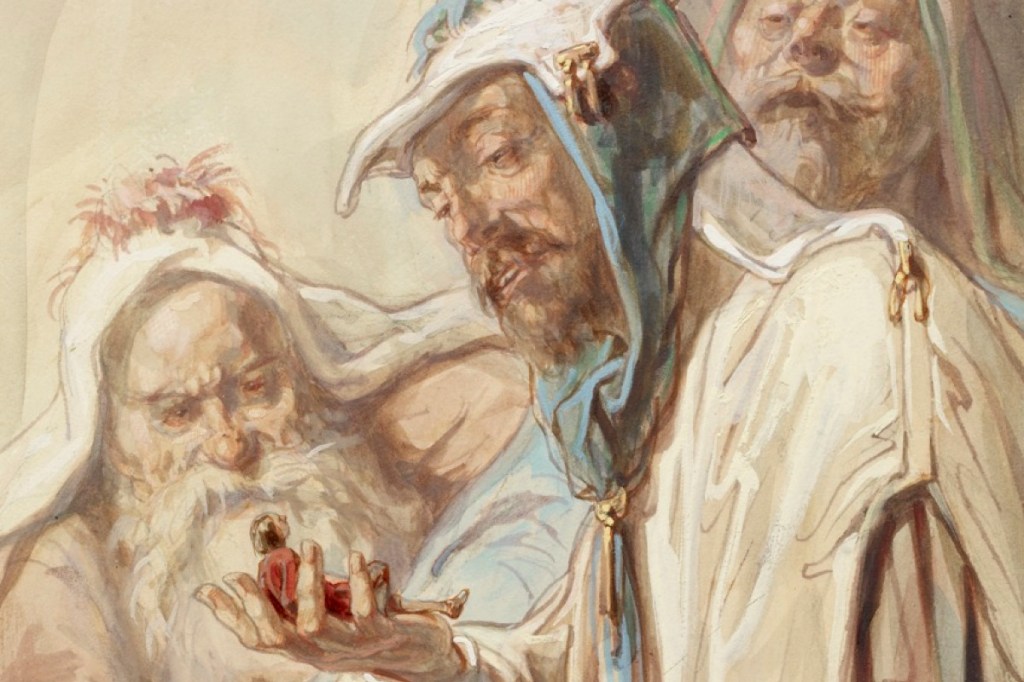
Day three into your cross-country road trip, the geologic formations of North Dakota have receded and given way to a broad, flat landscape under an azure dome of cloudless sky. You’re about to scan the radio dial for any station close to your tastes, when you hear a distant boom. Far, far south of you, from the violent swell of fire and smoke of an oil refinery, an immense woman steps forth. Her massive, shaggy head sweeps the landscape before her eyes fix upon your vehicle.
You’re sitting at your desk, and you feel this huge presence behind you. So large, it’s around you. You know what it wants, because you want the same thing. It’s a giant person, or you’re tiny and it’s a normal-sized person, a Normie we call them, and they’re crouched over and around you, watching what you’re doing. Because what you’re doing is not what you’re supposed to be doing—in my case, writing the next episode to this podcast. My personal giantess has been crouched over me, and I’m glad she’s there, I am, but what she sees is me posting updates to social media and taking an online sexuality quiz. Her belly arches over my seated figure, her knees rest on either side of my desk, and I can feel her body heat as I mix drinks to get ready to write.
I wrote out the script, originally a boozy ramble of too many ideas and experiences in my head. I read and refined my notes and performed the script. My giantess got up to stretch her colossal legs and went for a little walk.
Welcome to the third episode. What I want to talk about today is what macrophilia isn’t. A lot of centrists and outsiders have a lot of opinions about macrophilia when they see it, whether it’s a giant person being attractive in a cartoon or movie, or a 6’2″ OnlyFans model making a very comfortable living taking unusual requests for videos. Now, it’s difficult to talk about how macrophilia’s normal and common and okay without also talking about how porn is normal and common and okay.
And, uh, I’ve marked all these episodes as explicit, but this one is explicitly so. Heads up.
Size Fantasy is not a mental illness, a moral deficit, or an outlier. Sexual fantasies are common, everyone has them, whether they’ll admit it or not. Humans have manifested a fascination with their bodies and the sexual process for millennia. To see one example, you can travel to New Mexico and visit Petroglyph National Monument. There you’ll find an ancient symbol carved into the rock, a stylized human figure with his penis hanging between his legs. Figures like this exist all over the world, in every continent. It wasn’t a joke, it wasn’t vandalism, it was an early human documenting the fact of his life. Dr David Ley talks about this, coining the phrase “petro-porn,” in his informed and compassionate book, Ethical Porn for Dicks.
Of course, around the 1600s, Christian settlers felt the need to “correct” this imagery and gouged a cross beneath it. Carvings and sculptures honoring male and female sexuality around the world have been treated this way, either with the addition of religious markers or defaced and obliterated outright.
Another important work to understand sexual fantasy and human urges is Dr Justin Lehmiller’s Tell Me What You Want. For the writing of this book, he successfully conducted a survey of 4,125 Americans, asking them 369 questions about their sexual fantasies and sexual activities. When we talk about this stuff, it’s important to differentiate between what people dream about and what they perform, physically, in reality. The difference is crucial: you can fantasize about whatever you like, no matter how questionable, but some of our fantasies are wrong to reenact in the real world, especially when they don’t involve consenting adults. Those of us who are into Size Fantasy are kind of off the hook for this, since it’s not like we can go scaling a giantess or collect a bunch of tiny people in an aquarium tank, but how we interact with people online, cybersex, in silica, still requires consent. Telling a story or role-playing with another adult can be gratifying and rewarding, but demanding that someone fulfill your fantasies and harassing them if they don’t is still blatantly wrong and unacceptable. That is the real-world aspect of Size Fantasy, as it is with all role-play, and we have to observe it.
There was a period in 2016 and 2017 where a lot of periodicals like Men’s Health, Huffington Post, and Vice all pounced on the macrophilia tip. A lot of them cannibalized each other, too, citing the same sources or parroting each other to appear that they’d done the legwork. Many of them cribbed from a 1999 Salon article by Jon Bowen. The article was called “Urge: A Giant Fetish,” and you can find a link to it in the show notes. Bowen did the effort, explaining the basic precepts of Size Fantasy to an unfamiliar audience, though he couldn’t avoid some obvious jokes, not all of which were friendly. Still, he interviewed someone named Dave, who at the time was admin for Giantess World. Not Giantess World dot net, which is a huge story archive, but an earlier online forum of images, stories, and conversation, a site that went down in 2016. Dave’s testimony showed a sympathetic side to the attraction to giant and tiny people, representing a perfectly upright, normal person harboring these hypothetical desires.
Unfortunately, Bowen also obtained a few harmful quotes from Dr Helen Friedman, a clinical psychologist in Saint Louis, Missouri. Her sound bites suggest to me that all her opinions on pornography had come from the detractors of pornography, and that she’d never spoken to a giantess fetishist in her life. Here’s what she said about us Size fans: “They’re playing out some old, unresolved psychological issue … Maybe as a child they felt overwhelmed by a dominant mother, or a sadistic mother. Maybe they were abused. This [macrophilia] is not so much a fetish as a disassociation from reality. It’s part of an internal world. Healthy sexuality is about personal intimacy. It’s about feeling good about yourself in a way that expresses caring, and feeling a connection to another person.”
Friedman contends that macrophilia is exclusively born out of developmental trauma, and that it has no part in a healthy sexual life. Yet women are excluded from this gross mischaracterization because, in her words, “We live in a patriarchal culture. Women already see men as larger and more powerful. They don’t need to fantasize it.” She believes no woman could possibly be attracted to giant people, and that no woman could fantasize about being tiny. This is patently, provably untrue, so it’s more a testimony to Friedman’s outdated Freudian framing and lack of experience in this area. Despite, this harmful and inaccurate quote has been touted by Salon and Psychology Today and bloggers who bring up macrophilia in their “hey, look at this weird shit” journalism.
What else isn’t macrophilia? Uncommon and strange. Granted, when mainstream people see a sexualized giant person, some witling must cynically comment that someone in the world is jacking off to them. To which I must reply, “More than you’d think, apparently.” It’s only new to them! Mythology around the world has featured gigantic people and tiny people, and often they’re engaging sexually, one way or another. I have a print of Utagawa Kunisada’s illustration, “Beanman and Beanwoman prepare to attack the vagina,” originally created in 1827. It depicts a tiny man and woman in traditional Japanese costume stealthily crawling up the thigh of a nude giantess, warily approaching her hairy vulva. Beams of energy radiate from the large labia as they draw their weapons. It’s from a series of fanciful, absurd erotic images called New Tale of the Welling Waters. It doesn’t represent anything: Kunisada was just having fun. He had a crazy idea, and he wanted to see it outside of his head.
There’s an ancient and traditional Inuit myth of a god named Inugpasug who, among other adventures, initiated a wife-swapping with a normal-sized Inuit couple. The poor little woman was split asunder by Inugpasug’s erection, as you’d expect, whereas the tiny man disappeared within the vagina of the god’s wife and either disappeared forever or was dissolved and passed out with her urine later. Depends on who you ask.
And of course there was Jonathan Swift’s Gulliver’s Travels into Several Remote Nations of the World, published in 1726. In this, Gulliver briefly becomes the reluctant toy for a few playful Brobdignagian maids who tease him with their intimate body parts. That section of the story isn’t long enough for my tastes, but I’m satisfied to know that Swift thought about that scene in real-world terms.
We humans have forever been imagining amazing and astounding people. We’ve told legends of strong people, fast people, people who could fly or do improbable things with their bodies, people who turn into gods! Most cultures have stories about races of tiny people and giants. I’m going out on a sequoia-like limb to suggest it’s as much a part of our heritage as cooking meat and brewing beer. Maybe not everyone wants to make love to a giant or giantess, but people have wanted this for as long as we’ve been hunting and gathering.
Going back to Dr Lehmiller’s survey, based on his results he outlined the seven most popular sexual fantasies that American men and women play out in their minds. I have to keep specifying Americans because, regrettably, the poll wasn’t open to the rest of the world, but I promise you these proclivities exist all over the globe. Don’t get me started on Denmark. In Dr Lehmiller’s poll, he saw that 97% of Americans have sexual fantasies (and for my money, the remaining 3% do but are profoundly uncomfortable owning that) and 89% fantasize about threesomes. Men were more likely to have multipartner fantasies, but the majority of women also had them.
And in multipartner fantasies, people reported that what they were doing was much more intrinsic to the fantasy than who the partners were or where it was happening. Dr Lehmiller interpreted this to mean, reasonably, that the fantasy was therefore about sensory overload. With multiple partners, you’re surrounded by heaving breasts, quivering buttocks, soft pulsing mouths, and penises rubbing insistently into every nook, and maybe even the odd cranny if you’re not careful. The world with all its bad news and tedious concerns is shoved out of your head, momentarily replaced with warm, supple, clenching flesh and trickling fluids. The whole point of sensory overload is to fix you in place, fix you in the moment, concentrate all of your attention on what you’re doing and experiencing, with no distraction.
It is not so much of a leap to suggest that much of Size Fantasy involves this. Instead of multiple partners, you have one large one. One large breast to be pressed into, one large erection to embrace like a body pillow. One large person to cup you in their hands, shelter you from the world in their warm, soft palms. One large person to cover your whole body in a hot, velvety kiss, thereby washing away thoughts of work, bills, family obligations, the dishes that need to be done, etc. And it doesn’t have to be sexy, it can simply be comforting to lie in the possession of someone larger, stronger, abundantly full of love for you.
The second-most common fantasy Americans hold was reported to be BDSM. That’s bondage and discipline, dominance and submission, sadism and masochism. It’s a very flexible, accommodating fantasy, almost an open-door policy. And who better to hold you down than a giant? They can pinch your wrists between their fingers, press you down with their thumb or their toe, or smother you under other parts of their body. The giant is very clearly in control, relieving you of your responsibilities and obligations. Nothing exists but your duty to please the giant as best you can, or the giant uses you for their pleasure and gratification. All you have to do is lie there, reduced to a mere object, while mind-blowing sex is forced upon you. And yes, forced sex is also a popular fantasy among Americans. It may sound and feel like rape to outsiders, but the fact that someone wants this, that someone fantasizes about it negates the nonconsensual component. It’s forced sex, rough sex, but it is not a violation or intrusion, despite the theatrics of two or more consenting adults.
What we want in Size Fantasy is the same thing that the most popular sexual fantasies in the United States also want. We want to feel loved and desired. We want to shelve the concerns of the world and focus on our physical, emotional, and psychic pleasure as much as possible. I say “psychic” because of a truism I encountered during an attempted major in psychology: people pursue images and stories about impossible fantasies and fetishes, and “it’s all the same to the psyche.” If you can imagine it, that’s tantamount to having experienced it.
That’s why I try to make my stories as detailed and realistic as possible, considering all perceptual aspects, so people really feel, deep down, the impossible fantasy, like a movie they saw or a dream they had.
People who speak out against porn are only getting their information from the opponents of porn, definitely not sexual health experts or even the people who produce it. They don’t know what it’s really like, they don’t know what goes into it, and they don’t know the function it serves and has always served in human culture. Same goes for morning talk show hosts and indolent bloggers who make fun of Size Fantasy: they’re lashing out against something they can’t understand, like a tribe of chimpanzees throwing rocks at a solar eclipse. They make fun of anything strange and unusual to secure their place in the center, to avoid the hard work of considering alternative perspectives and the concerns of people who don’t resemble them.
I’d like you fans and fetishists to ignore the haters. Enjoy your kinks, my friends. They make you interesting. Everyone has them, but we at least can be honest about them, and in so doing, learn to accept and love ourselves, and few things are as important as that.
Questionnaire: BlueDream
BlueDream (nonbinary, he/they), or Eraxel “in olden times,” self-describes as a lurker providing commentary these days. A long time ago he wrote a couple stories but believes them to be lost. If you know otherwise, please write to me.
He prefers being around 5cm, or two inches, or smaller than that. As he puts it, “anything on the scale from being a whole head shorter than her, to fitting into her palm with room to spare is interesting, especially when it’s a ‘slow shrink’ kind of scenario.”
I’ve had Size fantasies even as a child, and I remember one especially vivid dream of being swallowed by an aunt of mine. That one has never left my memory.
Later as a teenager, I started to imagine being with a giantess, and was immensely fascinated by the thought of being shoved entirely into her vagina, used for pleasure and being hidden from the world. Up until then, I had no idea I wasn’t the only person to have such fantasies. When I hit my 20s in 1999, I gained access to what the internet was back then, searched for the term giantess, and found stories by veterans like Chelgi and Scott Grildrig. It’s probably easy to imagine how seen and connected I felt all of the sudden.
For me, the kink is very much sexual, and it’s oftentimes an immediate turn on. It’s not absolutely necessary for me to think of Size things to get in the mood. But when I do, it’s like a surefire ingredient. Even when I’m with my lovely partner—she’s fully aware, she’s got at least as much imagination as I do, and she finds a lot of it hot.
Aside from the purely sexual appeal, I also enjoy some well made New World Order stories. Then it’s that kind of fantasy of utopia or dystopia, depending on the flavor or the mood. Ultimately, however, I often feel like that, for me, the Size fantasy is mainly about imagining, feeling protected, hidden, owned, taken care of. Some sort of extreme symbol for connection, belonging, safety, tenderness, these kinds of things.
Links
- Dr David J. Ley, Ethical Porn for Dicks
- Dr Justin Lehmiller, Tell Me What You Want
- Jon Bowen, Salon, “Urge: A Giant Fetish“
- Shunga Gallery, “The Battle of the Sexes Design as Seen by Utagawa Kunisada“

 zHEIGHTgeist
Leave a comment